The home looks beautiful. The rooms are bright, the paint is fresh and everything appears ready for move-in day. Then you notice something small: a faint stain near an air vent, slight discoloration below a window or a musty odor that seems to disappear when the air conditioning starts.
It may be nothing serious—but it deserves an informed look.
Properties along Florida’s Emerald Coast live with conditions that homes in many other markets do not face. High humidity, salt air, heavy rain, wind-driven water and year-round air-conditioning can place added pressure on roofs, windows, exterior walls, plumbing, HVAC systems and ventilation. A home may look clean and well maintained while still having a moisture concern in a visible or accessible area.
That is why buyers, sellers and current homeowners should consider pairing a comprehensive home inspection with a professional mold inspection and assessment. Together, these services provide a broader understanding of the property and the conditions that may affect its value, durability, comfort and indoor environment.
This is not about fear. It is about replacing uncertainty with useful information.
Mold Problems Usually Begin With Moisture
Mold is often presented as the problem, but moisture is usually the condition that makes indoor growth possible. The U.S. Environmental Protection Agency explains that controlling indoor moisture is the key to controlling mold. Common moisture sources include roof leaks, plumbing leaks, condensation, flooding and high indoor humidity.
A dramatic patch of visible mold is not always the first sign. The earlier clue may be a water mark, swollen baseboard, soft drywall, condensation around a vent, staining below a window or an unexplained musty odor.
Finding and addressing the moisture source matters because simply cleaning a surface may not correct the condition that allowed the problem to develop. When a leak or humidity issue continues, staining, material damage or mold growth can return.
What a Comprehensive Home Inspection Evaluates
A professional home inspection provides a broad evaluation of the home’s visible and accessible components and major systems. Depending on the property, this typically includes:
- Roofing materials and visible roof conditions
- Attic spaces, insulation and ventilation
- Exterior walls, windows and doors
- Foundation and visible structural components
- Heating, cooling and ventilation equipment
- Plumbing fixtures, supply lines and drainage components
- Electrical panels, outlets and visible wiring
- Interior walls, ceilings and floors
- Installed appliances and other accessible components
The goal is to help the client understand the general condition and functionality of the property—not merely whether it looks attractive during a showing.
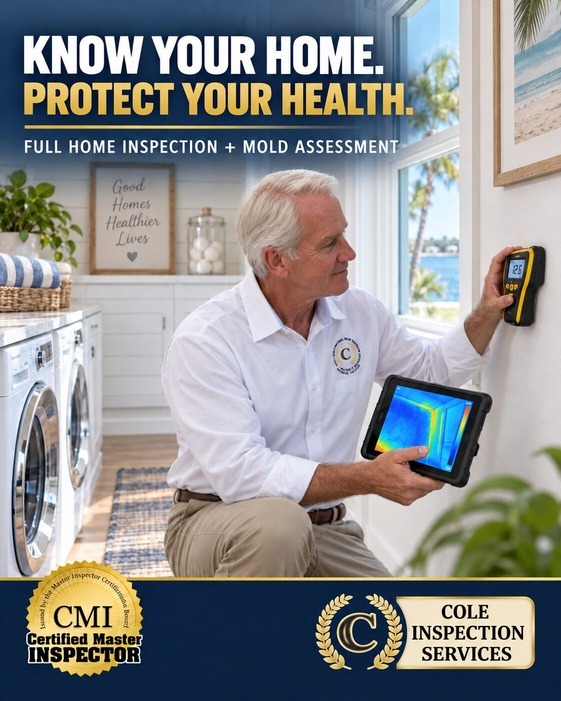
Cole Inspection Services provides detailed digital reports with supporting photographs and clear explanations. When appropriate and permitted, the inspection may also incorporate infrared imaging, moisture meters, telescoping cameras and drone technology to help evaluate areas that deserve additional attention.
What a Professional Mold Assessment Adds
A home inspection and a mold assessment are related, but they are not interchangeable.
A general home inspection looks broadly at the home and its systems. A mold assessment focuses more closely on visible conditions, moisture concerns, past water intrusion, musty odors and other indicators that may support mold growth. Sampling or additional testing may be recommended or performed when appropriate for the property and the client’s concerns.
Moisture meters can help evaluate building materials for elevated readings. Infrared imaging can help identify temperature patterns that may warrant closer investigation. These tools do not magically “see mold through walls,” but they can help an experienced inspector identify conditions that deserve further evaluation.
The objective is to answer practical questions:
- Is there evidence of an active or past moisture problem?
- Is a suspicious stain associated with elevated moisture?
- Could ventilation or condensation be contributing to the concern?
- Does a particular area warrant sampling or further investigation?
- What should the owner or buyer do next?
Why Mold and Moisture Matter to Your Home and Health
Unchecked moisture can affect drywall, wood, insulation, finishes and other building materials. Over time, it can contribute to deterioration and more expensive repairs.
The indoor environment matters as well. According to the Centers for Disease Control and Prevention, exposure to damp and moldy environments may cause health effects in some people and no effects in others. Sensitive individuals may experience symptoms such as nasal irritation, coughing, wheezing, eye irritation or skin reactions, and people with asthma or mold allergies may experience stronger reactions.
An inspection does not diagnose a medical condition. Anyone experiencing persistent or serious symptoms should consult a qualified healthcare professional. From a property standpoint, however, identifying and correcting unwanted moisture is a sensible step toward protecting both the building and the comfort of the people who occupy it.
Coastal Conditions From Destin to Panama City Beach
Although every property is different, several recurring conditions make moisture awareness especially important across our eastern Emerald Coast service area.
Destin and Miramar Beach
Homes, condominiums and vacation properties in Destin and Miramar Beach may experience wind-driven rain, exterior-envelope wear, HVAC condensation and long periods of vacancy between owners or guests. A property that remains closed for an extended period can develop a humidity or condensation concern without anyone noticing the early warning signs.
Santa Rosa Beach and the 30A Communities
Santa Rosa Beach, Seaside, WaterColor, Alys Beach, Seacrest and Rosemary Beach include primary residences, second homes, luxury properties and short-term rentals. Frequent occupancy changes can make it difficult to know when a small leak, overflowing appliance or HVAC drainage issue first occurred. A combined home and mold inspection can provide valuable context before purchasing, listing or making a major renovation decision.
Inlet Beach and Panama City Beach
Properties in Inlet Beach and Panama City Beach face many of the same coastal pressures, including humid air, intense storms, wind-driven rain and heavy seasonal property use. Condos and rental properties may also have moisture sources in adjoining units or shared building components that warrant careful attention within the accessible inspection area.
Local experience matters because coastal moisture is not limited to one neighborhood or one style of construction. The details may change from a beachfront condo in Destin to a vacation home on 30A or a primary residence in Panama City Beach, but the need for a careful, objective evaluation remains the same.
When Should You Consider Adding a Mold Assessment?
Consider discussing a mold assessment with your inspector when:
- You notice a musty or earthy odor
- There is visible staining or unexplained discoloration
- The property has a history of roof, plumbing or window leaks
- The home experienced flooding or storm-related water intrusion
- Indoor humidity or HVAC condensation has been a concern
- Building materials appear swollen, soft or deteriorated
- The property has been vacant or closed for a long period
- Previous mold remediation was completed and follow-up information is needed
- A buyer or family member has particular sensitivity concerns
These signs do not automatically mean a home has a major mold problem. They are reasons to gather better information before making assumptions or committing to repairs.
A Smarter Strategy for Buyers
Buying a home is one of the largest financial decisions most people make. A standard home inspection provides essential information about the property’s major systems, but adding a mold assessment when conditions warrant can help clarify moisture-related concerns before closing.
That information may help a buyer:
- Better understand the condition of the property
- Request appropriate additional evaluation when needed
- Discuss repairs or corrective action with the relevant parties
- Plan for maintenance after closing
- Move forward with greater confidence
The purpose is not to make a home “pass” or “fail.” It is to help the buyer make an informed decision based on the conditions observed at the time of the inspection.
A Proactive Step for Sellers
A mystery odor or suspicious stain discovered during the buyer’s inspection can interrupt an otherwise smooth transaction. A pre-listing home inspection and mold assessment can help sellers identify concerns before the property reaches the market.
Addressing a moisture source early may allow time for proper repairs, documentation and follow-up. It can also help the seller respond to buyer questions with facts instead of uncertainty.
Peace of Mind for Current Homeowners
You do not need to be buying or selling to benefit from an inspection. Current homeowners may request an evaluation after a roof leak, plumbing failure, HVAC drainage problem, storm event or extended period of vacancy.
If something smells different, a stain has appeared or a room feels unusually humid, investigating sooner can be more practical than waiting for the condition to become obvious. Early information often gives owners more options.
Why Choose Cole Inspection Services?
Cole Inspection Services is led by Wayne Cole, a Certified Master Inspector with more than 40 years of experience working with homes, including more than 30 years in Florida. Wayne is a Florida-licensed home inspector and Florida-licensed mold assessor.
Clients receive an objective evaluation, detailed reporting and clear explanations designed to make complex property concerns easier to understand. Cole Inspection Services serves buyers, sellers, homeowners, investors, real estate professionals and property managers from Destin and Miramar Beach east through Santa Rosa Beach and the 30A corridor to Inlet Beach and Panama City Beach.
Frequently Asked Questions About Home and Mold Inspections
Is a mold inspection included in a standard home inspection?
Not automatically. A home inspection is a broad evaluation of visible and accessible systems and components. A mold assessment is a separate, more focused service. Ask about adding it when scheduling so the inspection can be planned around your needs and the property’s known history.
Can thermal imaging detect mold behind a wall?
No. A thermal camera displays temperature patterns; it does not identify mold. Those patterns may help an inspector locate an area that deserves closer evaluation with a moisture meter, visual examination or other appropriate methods.
Does a musty odor always mean mold?
No. An odor alone cannot confirm the source or extent of a problem. However, a persistent musty odor is a reasonable sign that the area should be investigated for moisture and possible microbial growth.
Should I order a mold assessment for a beachfront condo or vacation rental?
It can be a valuable addition when there are odors, stains, known leaks, long vacancy periods, humidity concerns or prior water damage. Condos and vacation properties can have different moisture patterns than continuously occupied single-family homes, so the decision should be based on the property’s condition and history.
Do I need to see visible mold before scheduling an assessment?
No. Past water intrusion, unexplained staining, elevated humidity, recurring condensation or a musty odor may justify an assessment even when obvious growth is not visible.
Schedule a Home and Mold Inspection on Florida’s Emerald Coast
Do not judge a property only by what you can see during a walkthrough. A comprehensive home inspection paired with a professional mold assessment can help you understand both the home’s major systems and the moisture conditions that may affect it.
For experienced home and mold inspection services in Destin, Miramar Beach, Santa Rosa Beach, Seaside, WaterColor, Alys Beach, Rosemary Beach, Seacrest, Inlet Beach and Panama City Beach, contact Cole Inspection Services.
Call (850) 910-1113 or schedule your inspection online today.
Protect your investment. Protect your peace of mind. Help protect the health and comfort of the people who will call the property home.